
Can birth-control pills reduce your acne? And what happens when you stop taking them?

Many women are prescribed birth-control pills to help with their hormonal acne. The pill works by lowering the androgen hormones like Testosterone, and increasing a protein called Sex Hormone Binding Globulin (SHBG) which binds to Testosterone, making the Testosterone inactive or unavailable to tissues. 


Excess Testosterone in women can cause undesirable symptoms like acne on the face and back, hair growth on the face and permanent hair loss on the scalp.

Less free Testosterone = Less acne.

But here is the catch – the root cause is not being addressed.

So when you stop the pill the acne can come back and sometimes EVEN WORSE.

Now, why might Testosterone be high in the first place?
It’s not just one reason – there are several.

1. Blood Sugar Imbalances : Chronic blood sugar imbalances can elevate insulin levels in the body, and high insulin can drive up testosterone levels.

2. Chronic Stress : Elevated cortisol can signal the adrenal glands to produce more androgens.

3. Thyroid dysfunction : Especially Hypothyroidism, which can reduce the Sex Hormone Binding Globulin (SHBG) protein, that leads to more available Testosterone for the tissues.

4. Perimenopause or Menopause : This hormonal transition period can naturally shift the hormone balance in the body.

5. Liver function : The Sex Hormone Binding Globulin (SHBG) protein is mainly produced by the Liver. If the SHBG production is low then more free testosterone circulates.

And this is where nutrition and lifestyle come in.
By supporting blood sugar balance, stress regulation, thyroid health and liver function – you start addressing the root.

Now this does not mean the pill is “bad“.
In some cases, like certain presentations of PCOS, it can be important for protecting long term health.

So the key is :
👉🏻 Ask why you have been prescribed the pill.
If it is for a deeper medical reason, follow your doctor’s guidance.

But if it is only for acne – a root-cause approach is definitely worth exploring.


Finally Women with Endometriosis are getting the Validation they Deserve

The 2026 BAFTA Award for Best British Short Film was awarded to “This is Endometriosis”—a powerful real-life account that sheds light on the pain of endometriosis and the medical gaps that have long surrounded it. For years, this condition has often gone undiagnosed. Even when diagnosed, the lack of definitive treatment options in modern science has left many women with limited support, relying primarily on symptom management.


However, emerging research into the underlying drivers of endometriosis offers valuable insights into how nutrition and lifestyle may help support the body. 


A. An Estrogen-Driven Condition : Endometriosis is largely considered an estrogen-driven condition. Interestingly, blood estrogen levels may appear normal, while excess estrogen activity can still be localised within endometrial tissue.


What can help? Supporting the body’s natural hormone balance—particularly through gut and liver health.

  • Gut Health: The gut microbiome plays a key role in regulating and recycling estrogen. Imbalances may contribute to hormonal disruption.


  • Liver Function: The liver helps deactivate and clear excess estrogen. Suboptimal liver function can impact this process.

Since gut imbalances can present differently—bloating, IBS, acid reflux, or sluggish metabolism—approaches to healing must be personalised. 


Nutritional Support for Liver Function (Bio-individuality is key—what works for one person may not work for another.)

  • Glutathione-supporting foods: almonds, avocados, berries, grapefruit, oranges, sunflower seeds, tomatoes


  • Sulfur-rich foods: garlic, onions, cruciferous vegetables (broccoli, cauliflower, cabbage)


  • Dark leafy greens: arugula, chicory, collard greens, mustard greens, Swiss chard

B. Oxidative Stress : Oxidative stress is another contributing factor in endometriosis. Supporting the nervous system—particularly activating the parasympathetic (rest-and-digest) state—can be beneficial.


Supportive practices include:

  • Slow, mindful movement (e.g., gentle yoga, Yin yoga, Tai Chi)Breath awareness and present-moment focusAsanas such as Surya Namaskar, Triangle Pose, Reverse Warrior, Cat Stretch, Legs Up the Wall, and Reclined Twists

These approaches can support the body’s healing process, but they are not a substitute for medical care. It is important to consult with a qualified physician and understand your unique biology to optimise nutrition, detoxification, and hormonal balance.


#EndometriosisAwareness #WomensHealth #HormoneHealth #GutHealth #HolisticHealth #Ayurveda

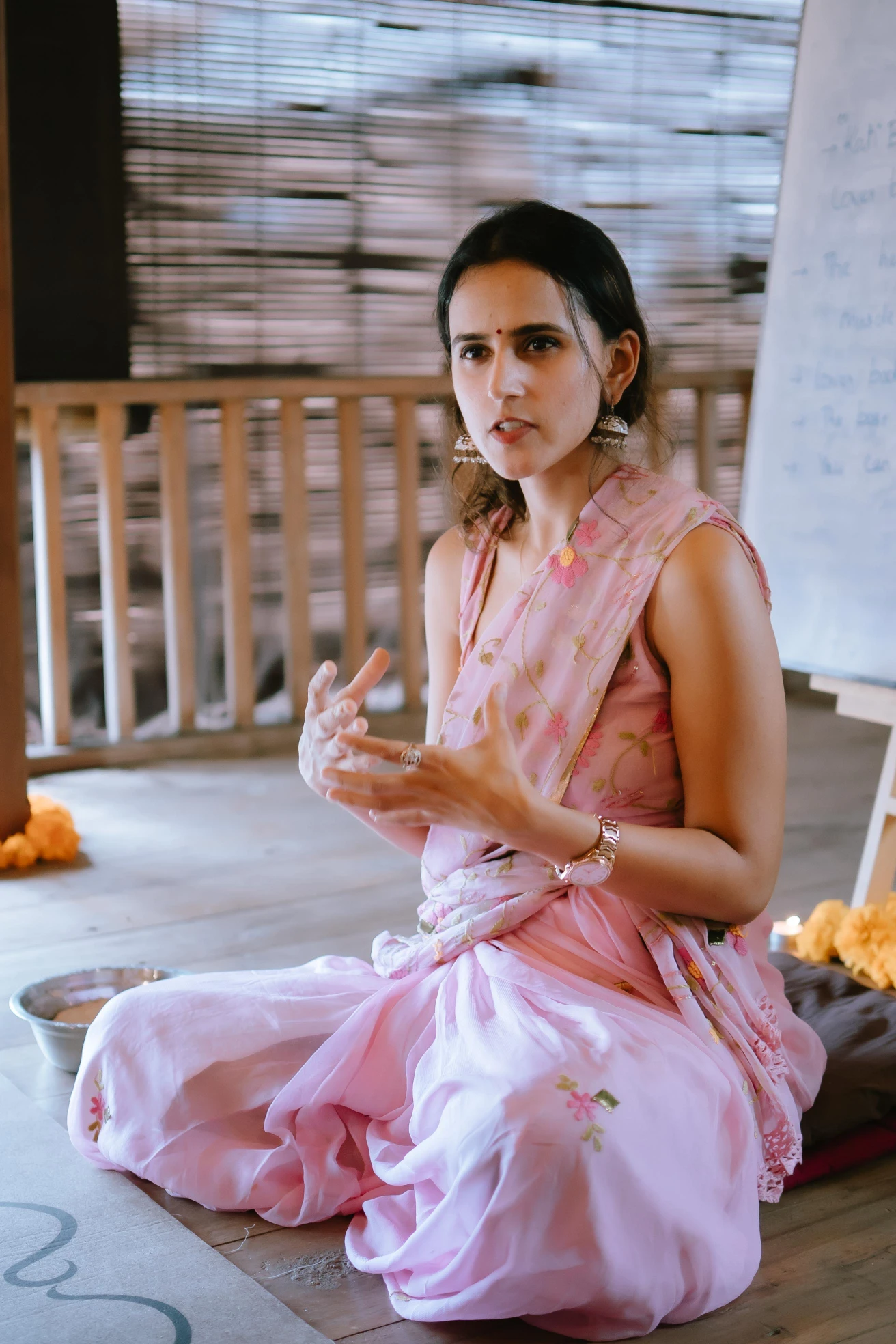
From Law to Ayurveda & Integrative Nutrition in Bali: A Journey That Changed My Life

If you had told me a few years ago that I would be living in Bali, teaching Ayurveda and offering integrative nutrition consultations, I would not have believed you.
My journey did not begin in wellness. It began in law.
But what I have learnt in this transition journey is that sometimes finding a path that aligns with you the most takes time.
Today, I work as an Integrative Nutrition and Ayurvedic Health Consultant in Bali, specialising in gut health, hormone balance, and root-cause healing. This is the story of how that shift happened — and why it may matter to you.

The Turning Point: Yoga Teacher Training in Bali
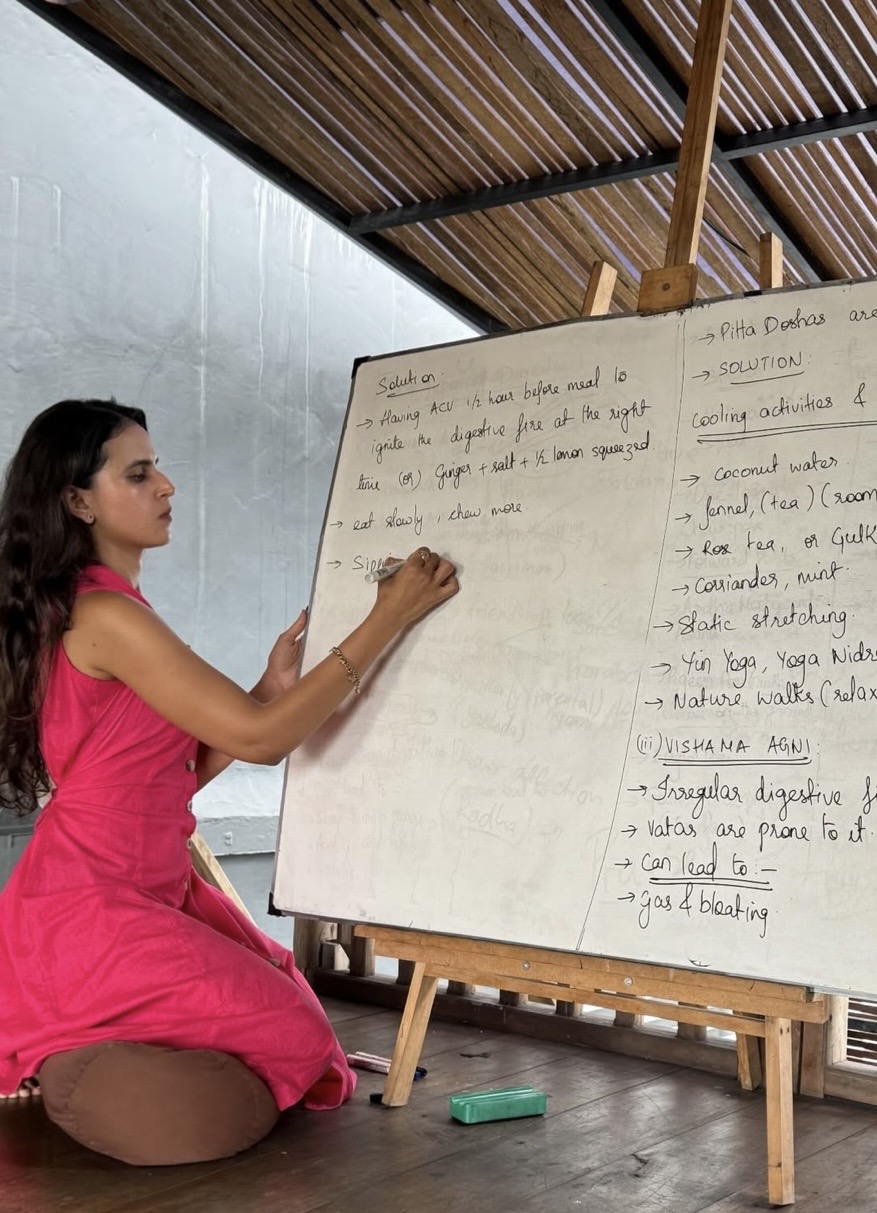
Before I began teaching, I immersed myself in a five-month intensive traditional yoga teacher training. It was structured, demanding, and deeply transformative. That experience reshaped my discipline and reconnected me to the intelligence of the human body.
Shortly after, I was offered an opportunity to teach Ayurveda and anatomy in a yoga teacher training program in Bali.
I still remember my first month. Standing in front of 20 to 25 students from all over the world — teaching subjects I had never formally taught before — was incredibly nerve-wracking. Among my students were doctors, physiotherapists, scientists, and osteopaths. The responsibility felt immense.

But something shifted as the months passed.

With every lecture, every question, every discussion, my confidence grew. More importantly, I discovered how deeply passionate I am about the human body — about its intelligence, its interconnectedness, and its remarkable capacity to heal when understood and supported correctly.

Why Gut Health and Hormone Balance Became My Focus
As I continued teaching, I also became a Certified Integrative Nutrition Health Coach, specialising in gut health and hormone health.
Through working with students and international clients — both in Bali and online — I began noticing common patterns:
Chronic digestive discomfort
IBS, gastritis, and acid reflux
Hormonal imbalances
Fatigue and brain fog
Stress-related inflammation
Irregular cycles and mood swings
What many people didn’t realise was that these symptoms were interconnected.
Your gut health influences your hormones.
Your stress levels influence digestion.
Your nervous system influences inflammation.
Your lifestyle influences your dosha balance (Ayurvedic constitution).
This realisation became the foundation of my work.
If you are curious about what my work looks like, you can explore my
→ Gut & Hormone Health Consultation https://divyanganachoudhary.com/#service
→ Ayurvedic Constitution Assessment  https://divyanganachoudhary.com/#service

Why Bali Became the Perfect Place for This Work

Living and working in Bali has deeply influenced my approach to holistic health.
Bali attracts individuals who are open, curious, and ready for transformation — from yoga teachers and digital entrepreneurs to retreat participants and long-term expats.
Many people come to Bali seeking clarity, healing, or balance. But what they often discover is that true balance begins internally.
As a Holistic Health Consultant based in Bali, I offer both:
Online consultations for international clients
In-person sessions
This hybrid model allows me to work globally while staying rooted in Bali’s wellness community.

From Teaching to Building My Own Practice

Over the past three years, teaching Ayurveda in Bali and offering integrative nutrition consultations gave me the confidence to establish my own independent practice.
This was not just a career pivot — it was a life alignment.
Every student who asked a thoughtful question.
Every client who experienced digestive relief.
Every woman who regained hormonal balance.
These moments built the foundation for my work today.
Now, my focus is expanding this service into wider communities — both locally in Bali and internationally.

If you’ve read this far, perhaps something resonated.
Maybe you’re in Bali searching for an Ayurvedic consultation.
Maybe you’re navigating gut or hormone challenges.
Or maybe you simply feel that something in your body is asking for attention.
I offer personalised Gut & Hormone Health Consultations in Bali and Online, rooted in Ayurveda and supported by integrative nutrition science.
You can begin by exploring:
→ Book a Consultation https://divyanganachoudhary.com/#service
→ Learn About My Holistic Health Approach
→ Free Discovery Call https://calendly.com/consultations-divyanganachoudhary/30min

Closing Reflection
Leaving law was not about abandoning one profession for another.
It was about moving toward alignment.
Ayurveda, integrative nutrition, and holistic wellness have given me the language to understand the human body — and the privilege to help others understand theirs.
If you are ready to restore balance, I would be honoured to support you.

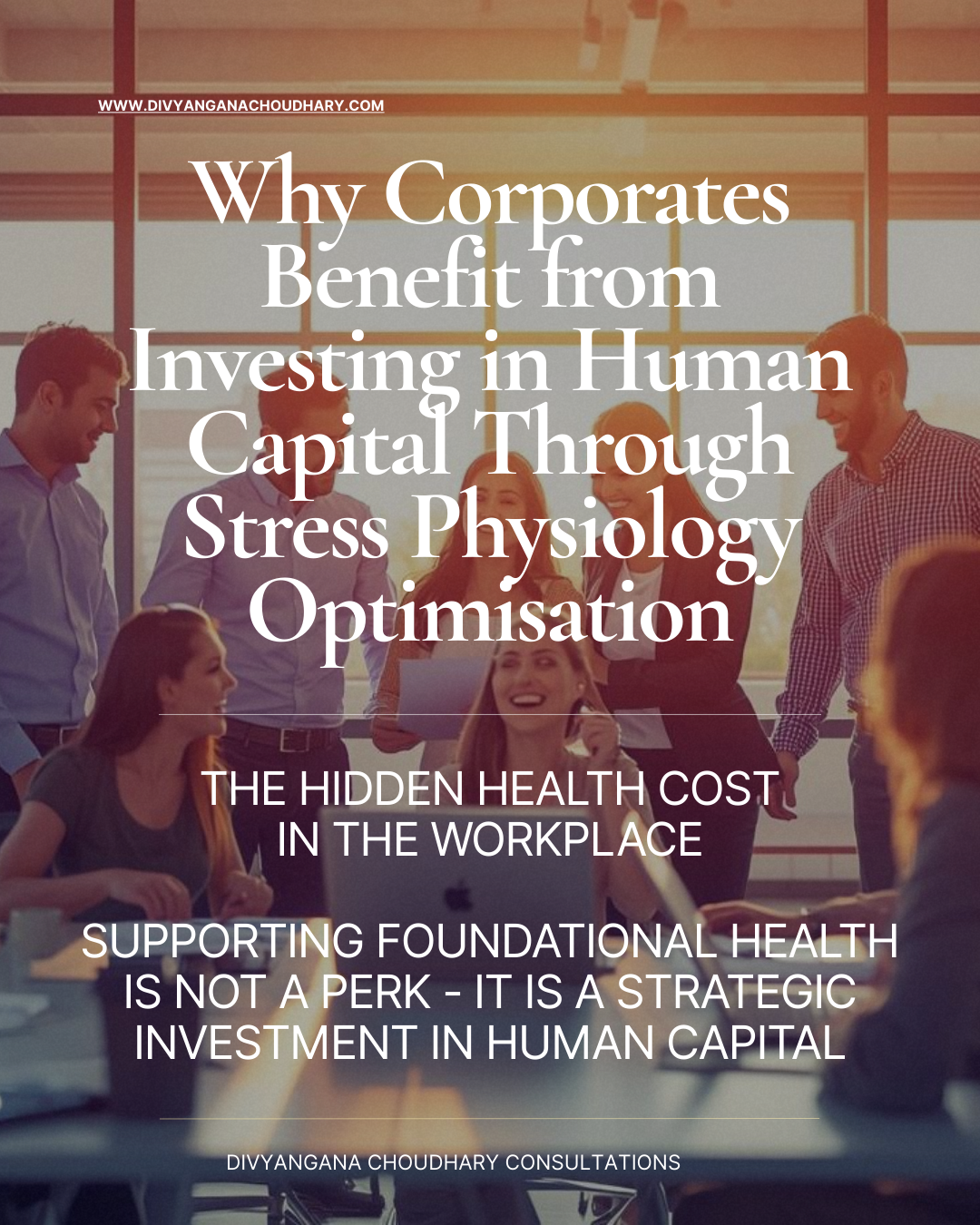
Why Corporates Benefit from Investing in Human Capital Through Stress Physiology Optimisation

The Hidden Health Cost in the Workplace – Chronic Health Conditions Are Impacting Workforce Performance

A growing body of evidence indicates that many chronic conditions are associated with an underlying dysregulated stress response.

– Diabetes (Hormone disorder) affects ~1 in 9 adults globally.
– IBS (Irritable Bowel Syndrome) affects 10–15% of the population.
– GERD (Gastroesophageal Reflux Disease) affects ~13–20%
– Chronic gastritis, bloating, dysbiosis are widespread but underreported
– Hormonal disorders (thyroid imbalance, Adrenal dysfunction, PCOS, metabolic dysfunction) are rising among working-age adults.

Workplace Impact:

– Fatigue & burnout
– Brain fog & reduced cognitive clarity
– Increased sick days
– Lower engagement and morale
– Increased healthcare costs
– Reduced productivity output
– Higher employee turnover

The Corporates have an ROI opportunity by investing in preventive, targeted wellness programs that can lead to:

– Improved energy and focus
– Reduced sick leave
– Higher employee retention
– Stronger workplace morale
– Enhanced productivity and performance metrics
– Better interpersonal relationships
– Reduced burnout
– Stronger resilience under stress

Supporting foundational health is not a perk – it is a strategic investment in human capital.